Teeth Whitening: Everything You Need to Know Before You Brighten Your Smile
Have you ever caught yourself smiling less in photos because of yellow or dull-looking teeth? You’re not alone. Many people walk into my clinic with the same concern—“Doctor, my teeth used to be whiter… what happened?”
A bright smile isn’t just about looks. It quietly influences how confident you feel in meetings, social gatherings, even casual conversations. And the good news? In most cases, restoring that brightness is simpler than people think.
Let’s talk honestly about teeth whitening—what works, what doesn’t, and what you should know before getting started.
What is Teeth Whitening?
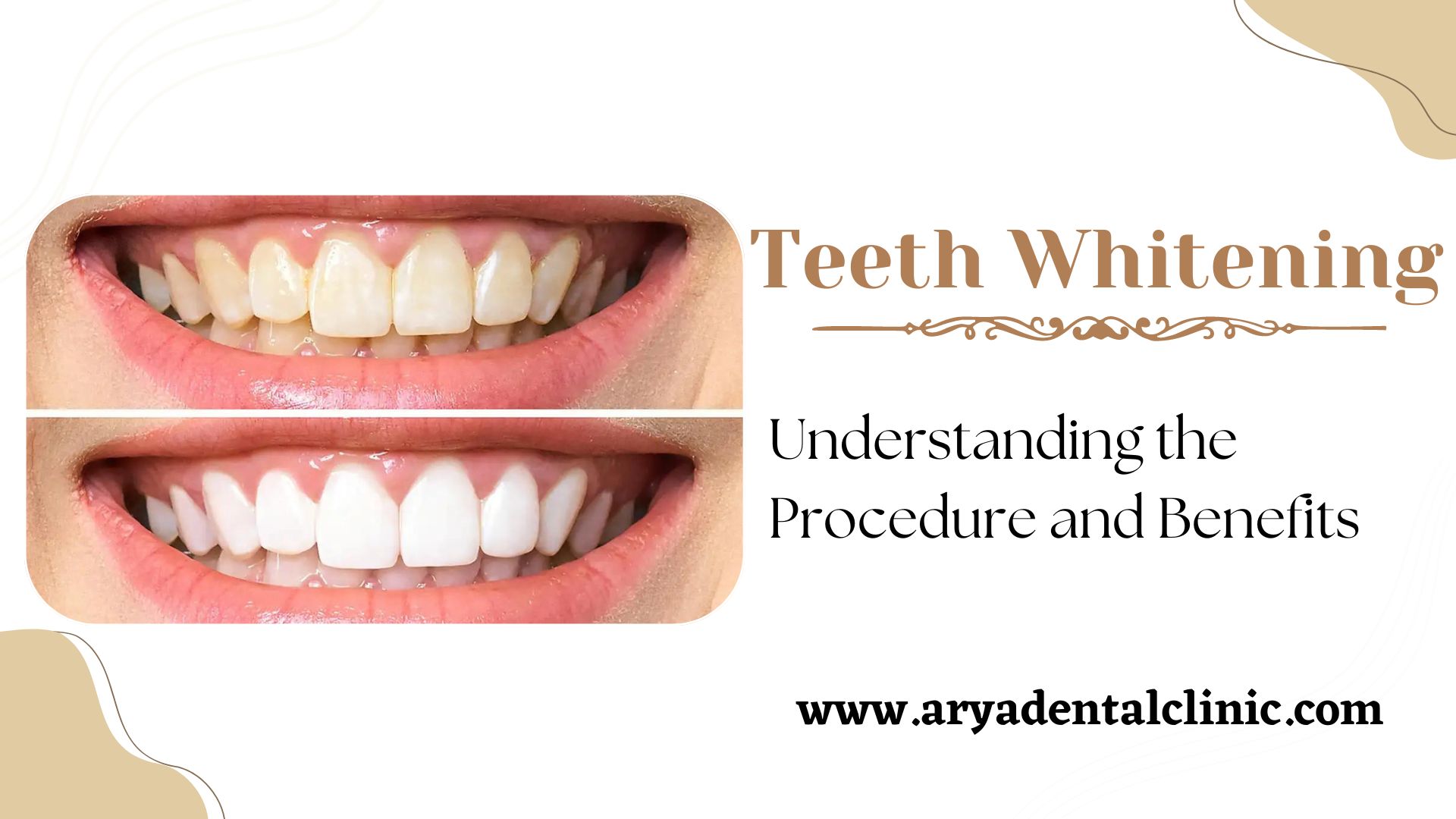
Teeth whitening is a dental procedure that lightens the natural color of your teeth by removing stains and discoloration. It doesn’t change the structure of your teeth—it simply enhances what’s already there.
Most whitening treatments use safe bleaching agents (like hydrogen peroxide or carbamide peroxide) that break down stains into smaller particles. This makes the teeth appear brighter and more reflective.
Think of it like cleaning a white shirt that has become dull over time—you’re not changing the fabric, just restoring its original brightness.
Why Do Teeth Become Yellow or Stained?
Before jumping into whitening, it’s important to understand why teeth lose their shine in the first place.
1. Daily Food & Drinks
If you regularly drink tea, coffee, or cola—this is probably the biggest culprit. In India especially, tea is a daily habit, and over time it leaves behind stubborn stains.
2. Tobacco Use
Smoking or chewing tobacco causes deep stains that are often harder to remove with regular brushing.
3. Ageing
As we grow older, the outer enamel layer slowly wears down, revealing the yellowish dentin underneath.
4. Poor Oral Hygiene
Irregular brushing or skipping dental cleanings allows plaque and stains to build up.
5. Medications & Health Factors
Certain antibiotics (like tetracycline), excessive fluoride, or medical conditions can also lead to discoloration.
Types of Teeth Whitening Treatments
Not all whitening methods are equal. Let’s break down your options clearly.
A. Professional (In-Clinic) Teeth Whitening
This is the most effective and quickest method.
How it works:
A high-strength whitening gel is applied to your teeth under controlled conditions. Sometimes a special light or laser is used to enhance results.
What you’ll notice:
Visible results in just one session
Teeth can become several shades lighter
Safe and supervised process
Best for:
People wanting quick, noticeable results
Stubborn or deep stains
B. At-Home Whitening (Dentist-Prescribed)
This is a more gradual approach but still reliable.
How it works:
You get custom-made trays that fit your teeth perfectly, along with a whitening gel. You use them at home over a few days or weeks.
Pros:
More controlled than over-the-counter options
Less sensitivity (in most cases)
Convenient
C. Over-the-Counter Products
These include whitening toothpaste, strips, and kits easily available online or in stores.
Reality check:
Results are usually mild and slow
Not very effective for deeper stains
Can sometimes cause uneven whitening
These are okay for maintenance, but not ideal if you want noticeable transformation.
Is Teeth Whitening Safe?
This is one of the most common questions I get.
The short answer: Yes, when done correctly.
Professional teeth whitening is considered safe. However, some people may experience temporary sensitivity—especially to cold foods or drinks. This usually settles within a few days.
Problems typically arise when:
People overuse whitening products
Use unverified kits
Skip proper dental evaluation
That’s why a quick dental check-up before whitening is always recommended.
How Long Do Whitening Results Last?
This depends more on your habits than the treatment itself.
On average:
Professional whitening can last 6 months to 2 years
But here’s the honest part—if you continue heavy tea, coffee, or smoking habits, the results will fade faster.
Tips to Maintain Results:
Rinse your mouth after tea/coffee
Avoid tobacco
Maintain good oral hygiene
Go for regular dental cleanings
Small habits make a big difference.
Who Should Avoid Teeth Whitening?
Teeth whitening is not for everyone.
You should avoid or delay it if:
You are pregnant or breastfeeding
You have active gum disease
You have untreated cavities
You have extremely sensitive teeth
Also, whitening does not work on:
Crowns
Veneers
Fillings
So expectations should be clear beforehand.
Common Myths vs Facts
Let’s clear up a few misconceptions I hear almost daily:
Myth 1: Whitening damages teeth
Fact: When done properly, it does not harm enamel
Myth 2: Whitening gives permanent results
Fact: Results fade over time depending on lifestyle
Myth 3: Whitening toothpaste can replace professional treatment
Fact: Toothpaste only removes surface stains
Myth 4: More whitening gel = faster results
Fact: Overuse can actually cause sensitivity and damage
Myth 5: Natural remedies like lemon or baking soda are safe
Fact: These can erode enamel if used repeatedly
Teeth Whitening Cost in India
Costs can vary depending on the method and clinic.
Here’s a rough idea:
Professional In-Clinic Whitening: ₹5,000 – ₹15,000
Dentist-Prescribed Home Kits: ₹3,000 – ₹8,000
Over-the-Counter Products: ₹300 – ₹2,000
While cheaper options may seem tempting, results and safety are often compromised.
A Dentist’s Perspective (From My Practice)
In my practice, I often meet patients who have already tried multiple home remedies before coming in. Some have used random online kits, others have tried DIY methods like charcoal or lemon.
The common outcome? Disappointment—or worse, increased sensitivity.
What I usually suggest is simple:
First, understand why your teeth are discolored. Sometimes, a basic professional cleaning itself improves the shade significantly. Whitening should come after that, not before.
Also, not every smile needs extreme whitening. A natural, healthy shade often looks far better than an artificially bright one.
The goal should always be a balanced, healthy smile—not just a white one.
Final Thoughts
Teeth whitening can be a simple and effective way to boost your confidence—but only when done the right way.
If you’re considering it, avoid the trial-and-error approach. A quick consultation can save you time, money, and unnecessary sensitivity.
At Arya Dental Clinic, we focus on giving results that look natural and last longer—while keeping your dental health the top priority.
If you’ve been thinking about whitening your teeth, it might be worth having a conversation about what’s actually suitable for you.
Sometimes, the difference between hesitation and confidence is just a brighter smile.